Building a Realistic Daily Routine to Keep Your Blood Sugar Steady
Living with diabetes can feel unpredictable
One day your blood sugar is steady. The next, it swings without an obvious reason. Meals, movement, medication, stress, and a bad night's sleep all affect your glucose levels. And when you're making dozens of small decisions every day just to stay on track, it can start to feel exhausting.
You're not alone in feeling that way.
Diabetes is a condition where blood sugar levels run higher than they should. In type 1 diabetes, the body stops producing insulin altogether. In type 2, the body either doesn't make enough insulin or doesn't use it effectively. Either way, when blood sugar stays elevated for too long, it can affect many parts of the body, including the nerves, heart, eyes, and kidneys.
Most people living with diabetes know what they're supposed to do. Eat well. Stay active. Take medications on time. Monitor blood sugar. The harder part is fitting all of that into a real day, one that already has work, family, stress, and everything else pulling at your attention. That's why so many people struggle with consistency, not because they don't care, but because managing diabetes can feel fragmented and overwhelming.
Building a basic daily routine around meals, movement, medications, stress, and sleep can make a real difference. Not a perfect routine, just a consistent one. Small, repeatable habits practiced day after day can smooth out blood sugar swings and make living with diabetes feel far more manageable.
Why routine matters for your blood sugar
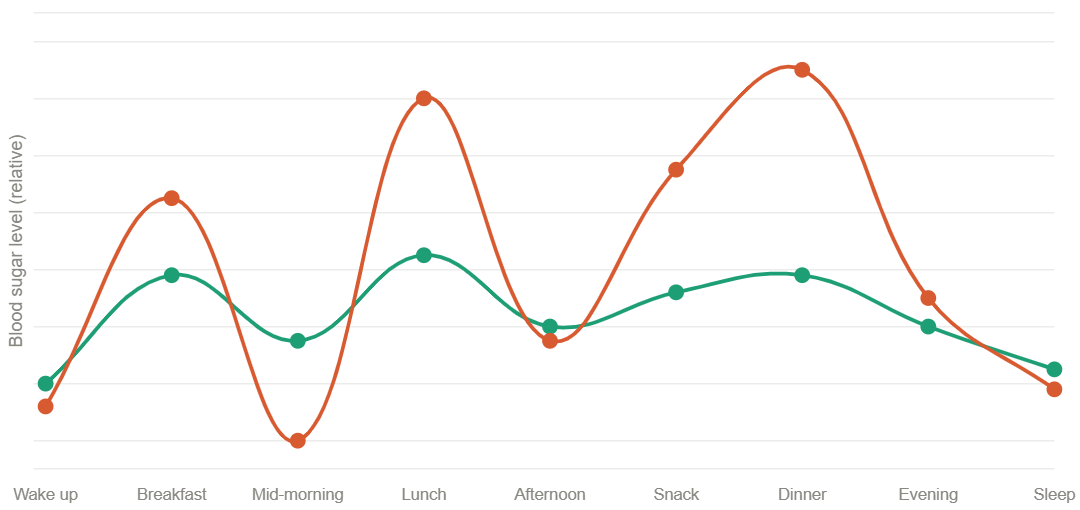
Your blood sugar doesn't rise and fall randomly. It responds to very specific things: what you eat, how much you move, your medications, your stress levels, and how well you sleep. Each of these factors affects how your body produces and uses insulin. Even small, consistent changes to any one of them can make a meaningful difference to how stable your glucose levels are throughout the day.
Of everything you eat, carbohydrates have the biggest impact on blood sugar. When you eat too many, your liver stores the excess as fat, which makes it harder for insulin to do its job properly. This raises both your fasting glucose and your blood sugar after meals.
The good news is that balance helps. Pairing carbohydrates with protein, fiber, non-starchy vegetables, and healthy fats slows the rise in blood sugar after eating. If you monitor your glucose, either through a continuous glucose monitor or by checking one hour after meals, you can start to see how different foods affect you personally and adjust from there.
Exercise is one of the most effective tools for managing blood sugar, but timing matters. Moving after a meal, whether that's a walk or a short burst of activity around 30 to 45 minutes after eating, helps your body process glucose more efficiently and reduces post-meal spikes.
Exercising before a meal works differently. It can improve how well your body responds to insulin, but it may also cause a temporary rise in glucose. Pairing pre-meal activity with a light, balanced meal helps keep levels stable. If you take insulin or a medication called a sulfonylurea, timing your movement around expected glucose peaks can also reduce your risk of blood sugar dropping too low.
You don't need a perfect routine. You need a predictable one. When your meals, movement, medications, stress management, and sleep follow a reasonably regular pattern, your body has a much easier time keeping blood sugar steady. Over time, that consistency adds up to better glucose control, a lower risk of complications, and a diabetes management routine that feels less like a burden and more like a normal part of your day.
How you start your morning matters
Starting the day with a consistent routine can help keep blood sugar steady. When you wake up, take a moment to notice how you feel and, if your doctor recommends, check your fasting glucose. This simple check-in can guide your choices for breakfast and early activity.
Hydration is an important first step in the morning. Drinking water helps support metabolism and can prepare the body for nutrient intake. Following this, eat a balanced, protein-rich breakfast. Research shows that a breakfast with more protein and moderate carbohydrates can help prevent blood sugar spikes compared with a meal heavy in carbs. Including foods like eggs, yogurt alternatives, vegetables, whole grains, and healthy fats can slow the rise in glucose and help your body manage the next meal better.
Adding a short burst of movement in the morning, even 5–10 minutes, can help “wake up” your muscles and support blood sugar control. Simple activities like stretching, a quick walk, or light exercises can improve insulin sensitivity and prepare your body for the day ahead. Combining a healthy breakfast with a little movement sets up a steady start, reduces morning glucose swings, and establishes a routine that is easier to maintain day after day.
Small habits that carry you through the day
Keeping a steady routine during the day can help prevent large swings in blood sugar. Eating meals at predictable times helps the body anticipate food intake, improving insulin sensitivity and reducing post-meal glucose spikes. While exact portion sizes and meal choices will be discussed in other sections, maintaining regular meal times alone provides a strong foundation for blood sugar control.
Adding a short period of movement after meals, even just 10 to 15 minutes, can further support glucose management. Research shows that light activity, such as walking, immediately after a meal can help reduce postprandial blood sugar. The timing matters because activity performed soon after eating is most effective as it coincides with the peak in blood glucose. Even brief walks after lunch or dinner can improve glucose disposal and contribute to better overall control.
For people with work or shift schedules, consistency may require some planning. Portable snacks can help prevent long gaps without food, and setting reminders to move after meals can make it easier to incorporate postmeal activity. Even very light exercise, such as slow walking or stretching, can make a meaningful difference over the course of the day. The key is to link these actions to daily cues like finishing lunch or returning from a break so that healthy habits become easier to maintain.
By anchoring meals and movement to predictable times, the body receives signals that support glucose stability, reduce stress on insulin secretion, and promote a smoother blood sugar pattern throughout the day.
How you wind down matters too
When it comes to the evening, the timing of dinner plays a key role in managing blood sugar. Eating earlier, compared with late dinner, can lower post-dinner glucose spikes, improve fasting glucose, and reduce nighttime insulin resistance. Shifting dinner to an earlier time may help align metabolic processes with the natural circadian rhythm, supporting glucose control through the night.
Adding gentle activity after dinner, such as a short walk, can further support postprandial glucose regulation. Light movement helps the body process the meal more efficiently and reduces the magnitude of glucose excursions, particularly when combined with an earlier dinner.
A consistent wind-down routine in the evening also contributes to better metabolic health and sleep quality. Simple practices such as reducing screen time, dimming lights, or engaging in relaxing activities signal the body that it is time to rest. Protecting sleep helps maintain proper hormonal balance, including insulin and glucagon activity, which in turn supports glucose stability for the following day.
By combining an earlier dinner, light post-meal movement, and a predictable evening routine, the body is better able to manage glucose overnight and prepare for the next day’s metabolic demands.
A sample day for steadier blood sugar
Morning (around 6:30 to 7:00 AM) – Begin with a glass of water. Check fasting glucose if advised. Eat a protein-rich breakfast with whole grains such as oatmeal, quinoa, or whole-grain toast and fruit.
Mid-morning (around 10:00 AM) – Take a short stretch or light movement break for 5 to 10 minutes to activate muscles.
Lunch (around 1:00 PM) – Include lean protein such as chicken, fish, tofu, or legumes, vegetables, and whole grains like brown rice, or quinoa. Follow the meal with a 10-minute walk to help manage post-meal glucose.
Afternoon snack (around 4:00 PM) – Choose a balanced snack such as yogurt (dairy or plant-based) with nuts or seeds.
Evening (around 7:00 PM) – Early dinner with a balanced plate: protein, vegetables, and whole grains like quinoa, wild rice, or whole-grain pasta. Optional gentle 10-minute walk afterward.
Night (around 9:30 to 10:00 PM) – Engage in a simple screen-free wind-down routine to protect sleep quality.
Fasting glucose is more predictable, supporting stable energy and better glycemic control the next morning.
When your routine is disrupted
Accept Imperfect Days
Not every day will go exactly as planned, and that is okay. The goal is steady, consistent habits over time, not perfection in every meal or activity. If a morning, daytime, or evening routine is missed, it is more helpful to reset for the next opportunity rather than dwell on what went wrong.
Start Small
Pick one time block, morning, daytime, or evening, and focus on changing just one habit. For example, begin with a protein-rich breakfast, a short post-meal walk after lunch, or an earlier dinner. Once that habit feels manageable, gradually add others.
Use Cues and Reminders
Cues such as putting shoes by the door, setting phone alarms, or placing water and snacks in visible locations can help trigger the habit. Linking a habit to a daily event, like a post-meal walk after lunch or a wind-down routine after dinner, reinforces consistency.
Track and Learn
Keeping simple notes on meals, glucose, or energy levels can help identify patterns and guide small adjustments. Occasional deviations, like a later dinner, skipped snack, or shorter walk, do not undo overall progress.
Build Consistency Over Time
Consistency is built over weeks, not hours. Normalizing imperfect days and treating them as learning opportunities supports better glycemic control, steadier energy, and improved alignment with natural daily rhythms.
A steady blood sugar is not built in a single day. It is built in the small, repeatable choices that happen across hundreds of ordinary days: a consistent breakfast, a short walk after lunch, an earlier dinner, and a screen-free wind-down. None of these habits are dramatic. That is precisely the point. The body responds to rhythm, and the more predictable that rhythm becomes, the less work blood sugar management feels. Some days will go off-plan. That is not failure. That is just life. What matters is returning to the routine, one small habit at a time, because consistency practiced imperfectly over time will always outperform perfection practiced briefly.
References:
Diabetes self-care practices and glycemic control. PubMed. 2023. https://pubmed.ncbi.nlm.nih.gov/37546053/
Structured routines and blood glucose stability in diabetes management. PMC. 2020. https://pmc.ncbi.nlm.nih.gov/articles/PMC7364446/#s14
Protein-rich breakfast and postprandial glucose response. PMC. 2019. https://pmc.ncbi.nlm.nih.gov/articles/PMC6619673/#sec20
Postmeal physical activity and glucose regulation. PMC. 2018. https://pmc.ncbi.nlm.nih.gov/articles/PMC6267507/#sec4-nutrients-10-01743
Meal timing, circadian rhythm, and glycemic control. PMC. 2024. https://pmc.ncbi.nlm.nih.gov/articles/PMC10903815/#sec019
Evening meal timing and overnight glucose control. PMC. 2017. https://pmc.ncbi.nlm.nih.gov/articles/PMC5610683/#S2
Sleep quality and metabolic health in diabetes. PMC. 2024. https://pmc.ncbi.nlm.nih.gov/articles/PMC11144034/#sec4